 Architecture of the Italian Province – Towns on the plains
Although they are far from uniform, settlements on the plains and coastal areas largely reflect the urban and economic development process of large cities. The more important waves of settlement correspond to the changing fate of the city's merchants and the level of capital accumulation necessary for agricultural investments. Accumulation, in turn, depended on economic prosperity, and it required relatively long periods of peace.
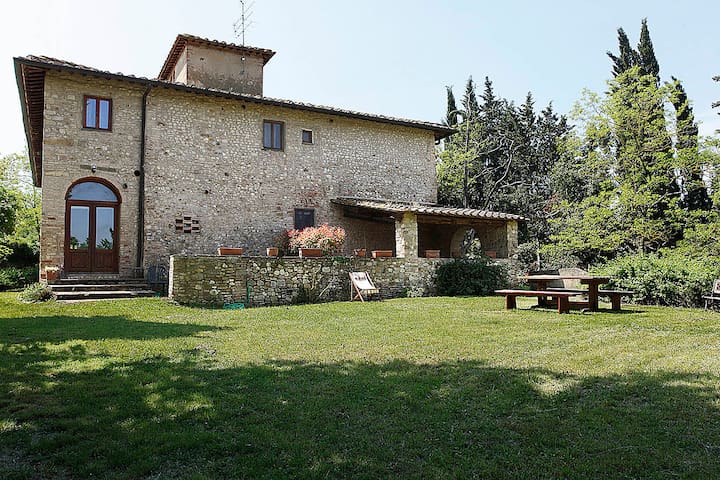
Not only the economic stimulus necessary for the development of agricultural areas came from the cities, but also the type of houses built by fearless nobility on the lands, which have been lying fallow for centuries. Residential tower (the tower house). which spread first in the areas of Mogello, Chianti and Casentino in the period from the 13th to the 15th centuries, she was actually a transplanted version of the high, square, fortified city residence; construction techniques were also borrowed from the cities, especially from fortified Bologna. Perugii i Sieny. The defensive nature of the tower-house can be seen from the thickness of the walls, small clearances of high windows and the height of the building.
As the centuries passed, The residential tower gradually lost its defensive character and appeared as a pigeon tower (the columbaia tower). rising above the center of the new form of extended residence. Turtle doves and pigeons not only efficiently exterminated snakes and weeds, but they provided valuable meat for the tables and natural fertilizer for crops. Although this functional role has gradually faded away, the pigeon tower has become an ubiquitous feature of provincial architecture throughout central and southern Italy and is still an important decorative element of contemporary villas.
Judgment. to which the pigeon tower belongs is casa dahlia mazzadria, classic renaissance summer villa. popular in Tuscany. Shadows and Marches, as well as in other areas of central and northern Italy. It was usually built on a square plan, with the use of brick, stone and terracotta, with a tented roof, whose peak was the tower. Depending on the location and urban models on which it is modeled, it may have a portico on the ground floor level (around Florence) and a loggia on the first floor (Arezzo). or the flat face of the front facade (around Siena).
The name of the house comes from the system of dividing the collections. according to which most of the crops were grown. In this system, la mezzadria (from the word mezza "half”), that is peasant, he gave the peasant half of the annual harvest in exchange for half of the seed. Therefore, the peasant had no advantage in buying livestock, nor in introducing new farming methods. At the same time, the workforce was impoverished, and increasing indebtedness forced her to receive free benefits - for example, building the main house on the estate. The peasant used this house only rarely, and the steward resided there (fragrance). who looked after the property invested in the land. Because in this system work was paid in kind, it encouraged the cultivation of only basic consumer goods, and discouraged specialization (based on local soil conditions) and new commercial solutions, which modern agriculture required.
However, specialization was needed in the alluvial plains of northern and central Italy. Large investments in soil recovery and irrigation were required to purify the soil for cultivation, which the Benedictines and Cistercians were the first to undertake in the period from the 11th to the 13th centuries.
Huge agricultural enterprises that deliver rice to the market, silk and dairy products had certain characteristics in common with monasteries, whose functions they replaced and extended. Farm (the house of the Po Valley) it was built around a side-length square courtyard 150 meters and more, and their architecture was often quite austere, with tall rectangular porticoes supported by square columns, often running along the three sides of the inner courtyard.