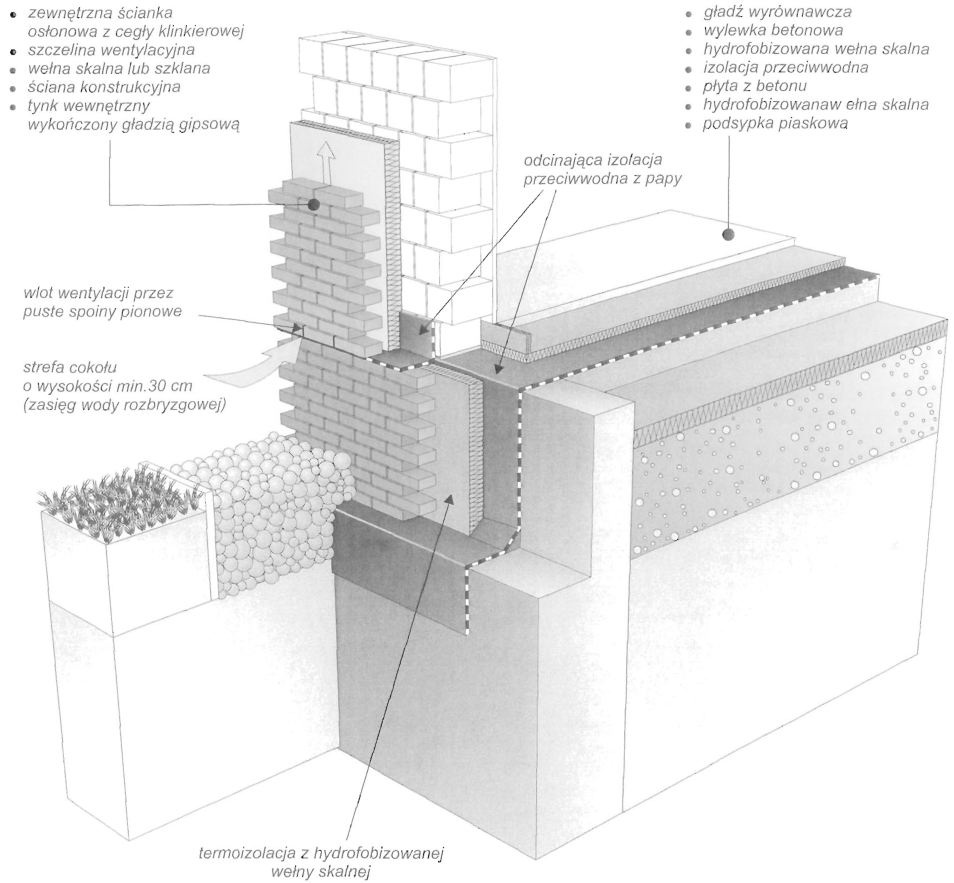
In buildings with the ground floor on the ground, the waterproofing of the foundation walls is combined with horizontal cut-off insulation under the external walls and horizontal insulation over the entire floor area on the ground. An additional strip of waterproofing cuts off the curtain wall and protects the gap above the plinth. Thermal insulation in the wall gap in the plinth area, hence below the water cut-off insulation, should be made of a material resistant to long-term moisture, e.g. made of hydrophobized stone wool.
In the case of three-layer ventilated walls (with a facade made of grouted clinker bricks) the ventilation gap starts above the watertight shutoff.
The ground floor should have as high a sand bed as possible, because it allows to reduce the natural ground radiation and moisture. The use of thermal insulation for contact with the ground under the floor slab, directly on the sand bed, accelerates the drying of the concrete slab and prevents rising soil moisture.
The ground floor of a building without a basement with diaphragm walls raised from the ground level and the floor on the ground.